
Author name: Valish

Blogs

The Real Value of IT Staffing Agencies for Businesses

The Real Value of IT Staffing Agencies for Businesses A single bad tech hire can cost a business more than just salary – it can delay projects, reduce productivity, and slow down growth. That’s one reason why IT hiring in the United States has become more competitive than ever. Skilled tech professionals are getting hired quickly, while many companies struggle to find the right talent at the right time. This is the main reason some businesses decide to work with IT staffing agencies instead of handling everything on their own. Because nowadays, hiring is about hiring the right people without spending time, effort, and resources. In this blog, we will look at the reasons why IT staffing agencies matter and how a good hiring partner can not only make the situation less stressful but also more efficient. Why Organizations Should Use Staffing Agencies To Hire In today’s market, skilled professionals have multiple opportunities. So by the time many companies finish their hiring procedures, candidates are probably already hired by someone else. Staffing agencies fill this gap. Staffing agencies have networks, sourcing strategies, and industry knowledge that help companies connect with qualified candidates. They also help reduce hiring pressure on internal teams. Your HR department doesn’t have to manage every part of recruitment alone. Staffing agencies help businesses focus on finding the right fit. That leads to better hiring decisions, stronger teams, and less turnover in the long run. Key Benefits Of IT Staffing Agency Access to Specialized Talent Pools One of the biggest advantages of working with an IT staffing agency is access to skilled professionals who may not be actively applying on job portals. Agencies have reliable & attractive networks of talent and they can easily identify candidates with particular technical expertise & industry background. Reduced Hiring Risks and Costs Hiring the wrong person can cost both time and money. IT staffing agencies help reduce this risk by screening candidates before presenting them to you. This also lowers the cost and effort involved in repeated hiring. Accelerated Time-to-Hire In tech hiring, speed matters. Good candidates often get hired quickly, and long hiring processes can lead to missed opportunities. Staffing agencies help speed up sourcing, screening, and coordination so you can fill positions faster. Flexibility and Scalability Sometimes the requirements for hiring fluctuate due to the availability of new projects, workload, or business diversification. An IT staffing agency gives you the ability to hire for any duration- short term, long term or project-based without leading to unwanted phone pressure on your internal team. Improved Cultural and Technical Fit Technical skills are important, but so is team compatibility. Staffing agencies focus on understanding your work culture and hiring needs to help you find candidates who fit both technically and professionally. Reduced HR Burden Managing recruitment takes a lot of time. Staffing agencies handle much of this work so that your HR team can focus on other priorities. Common Challenges Of IT Hiring Businesses Face Technology is a never-ending, changing field but it is still a big challenge to find professionals with proper technical skills.  1. Persistent Skills Gap Technology keeps evolving, but finding professionals with updated technical skills is still a challenge. Many companies struggle to find candidates who match both the technical and practical requirements of the role. 2. High Competition & Speed of Hiring Leading IT professionals receive multiple job offers in a very short time. If the process of hiring gets too stretched, companies end up losing strong candidates even before making the final decision. 3. Offer Dropouts and Attrition Even after selecting a candidate, there’s always a risk of offer rejections or employees leaving early. These scenarios create loopholes and companies are forced to conduct the hiring process again from the beginning. 4. Inaccurate Technical Assessments Not all the internal hiring teams have technical expertise. This can make it difficult to properly evaluate a candidate’s technical abilities and experience during interviews. 5. Unrealistic Requirements & Budgets There are times when companies want extremely skilled individuals while working with a limited budget and unrealistic timelines. This leads to gaps in hiring and slows down the recruitment process. 6. Passive Candidate Sourcing Many of the best tech professionals are not actively searching for jobs. Reaching these passive candidates requires strong networks and targeted sourcing strategies, which staffing agencies already have in place. With the right IT staffing partner, businesses can avoid many of these hiring challenges and build stronger technical teams more efficiently. How Vizva Consultancy Services Is the Right IT Staffing Partner for You Finding talent in the field of technology is one thing. Finding the right talent without slowing down your business is another thing. That’s where Vizva Consultancy Services helps. We realize that recruitment in the IT department is not about filling vacancies quickly. It is about finding staff who are in line with your technical requirements, work ethos and business goals.  Our team focuses on understanding what you need before starting the hiring process. Then we reach out to candidates who are not just well-versed in their technical domain but are also team players. We also know how fast the IT industry moves. Delays in hiring can affect projects, productivity, and business growth. That’s why we focus on faster sourcing, efficient screening, and smooth coordination throughout the recruitment process. Instead of struggling with the internal hiring times or spending your precious time, you will get a partner in hiring who will let your business grow through talent searching. When you get the right IT staffing partner, then hiring is a lot less stressful, more efficient, and way more effective. Final Thoughts Hiring in the IT sector has been tough for a lot of companies all over the US. It’s hard enough just finding talented people, but then if you want to hire them fast and at the same time keep all the paperwork and stuff straight well, if you’re doing it all by yourself, you’re in for quite a time. That’s why more businesses

Recruitment Process Outsourcing (RPO) services for efficient hiring solutions.
Blogs

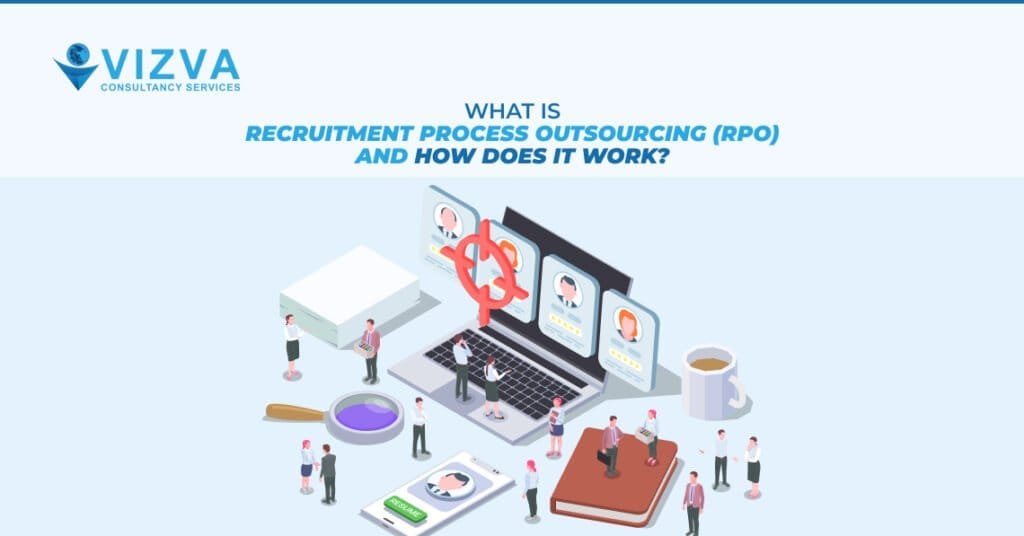
What is Recruitment Process Outsourcing?

What is Recruitment Process Outsourcing? Hiring today is not as simple as posting a job and waiting for the right candidate to apply. If you have tried recruiting recently in the United States, you probably found out that it requires a whole lot more time, effort, and sometimes resources than one might think. And even after all that, the challenge is still finding the right candidate. But the question is, what if you didn’t have to manage the entire hiring process on your own? Many companies, instead of running everything under their roofs, are opting for more clever and flexible hiring management ways so that they can concentrate on their growth and let the recruitment experts deal with the hiring process. One of the most effective approaches that’s gaining attention is Recruitment Process Outsourcing (RPO). In this blog, we’ll break down what it is, how it works, and why more companies are moving towards it. What Is Recruitment Process Outsourcing (RPO)? Recruitment Process Outsourcing, or RPO, means that you decide to have an external expert take care of your hiring processes rather than running them all internally. This does not mean that you completely lose the power. It means that you get the best help in terms of effectively managing the hires. RPO partner gets to know your hiring requirements, your corporate environment, and the kind of talent that you desire. Based on that, they handle everything from sourcing candidates to final selection support. As more companies look for smarter ways to manage hiring, RPO is becoming a practical and effective solution. How RPO Works Now that you know what RPO is, let’s understand how it actually works in a real hiring setup. Embedded Partnership RPO Partner is not that guy who just mails candidate profiles after every couple of days, but actually knows and does work together with your internal hiring team through thick and thin. Also, they learn your business, your culture, and your target candidates. As a result, not only do they make the best picks of the candidates who have the required skills, but also those who can seamlessly fit in the corporate culture of the company.  Process Management Structure is one of the benefits of RPO. The entire hiring process – from sourcing candidates to screening, interview coordination, and follow-ups- is done in an organized way. This removes hassle, makes things faster, and guarantees that every single step is properly taken care of without adding any stress to your team. Scalability & Flexibility Hiring needs are never constant. Sometimes you need to hire fast, and sometimes hiring slows down. RPO gives you the flexibility to scale your recruitment efforts up or down based on your business needs. Even if you will be recruiting for just one post or one big team, the whole procedure will be aligned without any disturbance to your business activities. Benefits Of Recruitment Process Outsourcing Now let’s talk about what you actually gain from RPO. 1. Cost Reductions You can end up with pretty high expenses related to hiring, if you include everything, such as job ads, tools, internal team time, and delays. RPO helps you keep these expenses down because the whole process is more efficient and well-organized. You spend less time and money on repeated efforts and unfilled roles. 2. Increased Hiring Speed A time-consuming part of the hiring cycle is the time when roles remain vacant. And the longer they stay open, the worse the productivity will be. An RPO partner can streamline this process so that sourcing and screening go on smoothly and quickly. 3. Improved Quality Of Hire RPO partners focus on understanding your requirements deeply, which helps in shortlisting candidates who match both the role and your company culture. 4. Scalability And Flexibility Your hiring needs can change anytime. One time you will need to fill many roles, the next, the hiring will be almost at a complete stop. RPO makes it super easy for you to modify your recruitment activities whenever you want, without dealing with the pressure on your internal team or fixed costs. 5. Access To Technology And Analytics RPO providers often use advanced tools and data insights to improve hiring decisions. This means better candidate tracking, smarter screening, and clearer visibility into your recruitment performance. 6. Enhanced Employer Brand If the candidates experience a flawless recruitment process, they will find themselves in a professional and well-organized company. Therefore, by improving communication and the candidate experience, your company is seen as more organized and reliable. 7. Improved Compliance and Risk Management Hiring involves legal and compliance requirements, especially in markets like the United States. By working with an RPO partner, you will have an expert who will make sure that everything you do is in accordance with laws and regulations.  How Vizva Consultancy Services Can Be The Right RPO Partner For You Selecting the right RPO partner involves more than just deciding to outsource your hiring. It’s about partnering with a group that not only understands your company but also makes the whole hiring process easy for you. At Vizva Consultancy Services, we see hiring as very personal since each company has its own set of recruiting needs. That is why the first step is always trying to figure out the kind of people you want to add to your team. Whether you’re hiring for a few key roles or building a large team, we align our process with your goals. We work as an extension of your team, not just a service provider. From sourcing candidates to managing the entire hiring process, we focus on keeping things simple, structured, and efficient. This helps you save time and ensures you’re not overwhelmed with the hiring workload. We understand that hiring is not just about filling positions. It’s about helping you build a team that supports your business growth. Final Thoughts If you have been trying to handle it all, posting jobs, screening resumes, and scheduling interviews, it’s likely that you recognize

Blogs

How to Stand Out in the Crowded IT Job Market in 2025?

How to Stand Out in the Crowded IT Job Market in 2025? In the present dynamically changing world, the area of Information Technology (IT) does not seem to slow down, which means an abundance of opportunities for even the most skilled professionals. The surprising thing was the fact that the higher the demand, the fiercer the competition which in return became the primary reason why the job seekers had to find a way to stand out. The 2024 year might be highly competitive for the IT job market. Whether you are a computer science enthusiast or the greenhorn in the IT market, it does not matter. It takes more of the strategic and harmonized approach that features soft skills and technology skills to ensure you stand out effectively among the fierce competition. Introduction  The IT market in 2024 is more competitive compared to that of the last years because they are seeking the finest technologists as innovation continues and digital disruption is going downwards. Technology canister always tends to outpace humans and sometimes evolves unpredictably. So, there is always a rise in demand for highly skilled IT persons. In this writing, we will explore some of the ways that you can be chosen to join and be part of the fast-advancing information technology industry. Looming over the mass of people  When you consider the sea of qualified candidates you should never forget that you need to differentiate yourself from the rest of them to be able to get noticed by the employers. As now so many on-the-job candidates are competing for one place, then the most powerful weapon to outshine all those others to capture the attention of the hiring manager is to reveal that you are not the like they are looking for. Leveraging AI Skills  With regard to the IT sector, AI is the key skill that many companies strive for in the present global scenario. The organizations deploying AI technology are seeking enthusiastically experts who know their job very well and whose level of knowledge of AI is very high. Constant learning and development by you and always being aware of the AI community news will definitely make you a big deal in any company. Mastering Soft Skills Employers often pay much attention to technical skills but they also place much weight on soft skills when they finish interviewing candidates. Personal attributes like communication skills, teamwork, and critical thinking are the key soft skills employers cherish in IT professionals who work in a demanding, fast, and collaborative environment. Through the development of such soft skills, you will have the opportunity to prove your capacity to work effectively as part of a team and hence the overall team success. Showcasing Cybersecurity Expertise Among these, the level and amount of sophistication of cyber-attacks have greatly increased over the last few years, which has made cybercrime expertise one of the most sought-after ones from many different sectors. The area of focus might be network security, ethical hacking, or data protection during the cybersecurity job experience. Highlighting these points will show your potential employers that you are a part of an important group of IT candidates. Cloud Computing Skills  With cloud computing as a foundation, the modern IT platform has become flexible, dynamic, and innovation-friendly. This opens the door for organizations to perform on a larger scale and to achieve goals at a faster pace. By mastering cloud skills and obtaining relevant certifications, you can evidence to an employer that you can make cloud services function, for instance, you can design, implement, and manage cloud-based solutions. Lifelong learning and mobility   Whereas IT is a dynamic field, ongoing learning and being up to date with recent updates are crucial to guarantee consistent performance. Through being curious, exploring every chance to develop your skills further, and accepting change as a form of future advantage, you gain the necessary skills to be a good forward-thinking person who works in any position. Networking and Making Professional Relationships   Networking in the IT market is the key area that appears to improve the chances of people opening the door to acquaintance with industry practitioners and learn something with peers, and there is also an opportunity to discover new job options. The development of personal and professional relationships can be done online through platforms of online profiles, through visiting events of the industry, or through professional associations, all of which lead to opening new doors and an obvious distinction from the competition. Produce strong portfolio  An intelligently packed portfolio can demonstrate what you can do, what you have achieved, and what types of projects you completed, giving possible employers samples of your aptitude and ability. The purpose of a portfolio is the same no matter your role: whether you’re the developer, designer, or cybersecurity expert; your portfolio is going to highlight the best work you’ve done, and it’s going to be written on the minds of the prospective hiring managers. Integrating Resumes and Cover Letters Highlighting the pertinent skills and accomplishments to each specific job registration is a must to illustrate that you are a good match for the position and to attract the attention of recruiters. It is possible to attract the attention of hiring managers for a given job by showcasing your relevant skills, experiences, and achievements in an application that fits some of their requirements. You can get an interview, thus. Preparing for Interviews The art of interview preparation can surely swing the odds in one’s favor in the fast-evolving perfect job search. If you do your homework by visiting the company’s social media pages, researching the business strategies, and paying attention to any emerging trends, it will help you to do better during the interview session. Seeking Feedback and Continuous Quality Control Feedback is an invaluable tool, which kicks one on the tracks of improvement, offering suggestions on places where you can refine your abilities. Getting certain kinds of feedback from mentors, peers, and interviewers gives you a chance to be an active person who always is trying to improve and differentiate yourself in the market of Information technologies. Install Modern Industry Trends. Technology is always changing, and the residue of it, there are novel technologies, fronts, and methodologies showing up in the sector daily. Keeping up with current developments and acquiring relevant degrees or certificates is a sign that you are committed to not only your personal growth but also the further development of the profession for which you are a part. Effective Ways of Being Positive A positive attitude is transformable to a strong one in the aggressive domain of IT. What is more, you need to overcome challenges differently following positive expectations, possessing a growth mindset, as well as the capability of being resilient in the face of obstacles. In this way, it can be

Blogs

Most Demanded IT Skills for 2025 That Will Secure Your Career

Most Demanded IT Skills for 2025 That Will Secure Your Career Explore the current IT skills that will prove most valuable by 2024. There are quite a few things IT employers look for in candidates, some secrets for you to excel with your IT skills in 2024, and how to avoid having your skills become obsolete in the emerging technology environment. KEY-TAKEAWAYS: To be unique with your IT skills, you can evaluate your current skills in relationship to the existing trends, add and update your skills often, be open to change, and act like a learner. From the IT recruiters’ perspective, the most important qualities to be possessed by candidates are technical skills, problem solving skills, analytical skills, communication skills, and company culture fit. AI, machine learning, cybersecurity, cloud computing, data science, DevOps are some of the fields that will help one to improve his career in IT in 2024. The IT skills may not become outdated, but with AI augmentation, understanding more about AI and obtaining the related fields can only be beneficial. How to keep IT skills up-to-date and get relevant certifications and real-life practice to prepare for today and tomorrow. Another aspect that should not be overlooked is the need to ensure proper networking and updating one with the happening in the field. This blog aims to explore the concepts of the top IT skills required for 2024 workforce and the reason why it is crucial in ascending the career ladder and utilizing job security. Thus, paying attention to these skills, constant learning, and continual acquisition of new opportunities will help build a successful career trajectory. Being in the fast-paced technological era, it is very important to take refresher courses to increase employment prospects and ensure a job. Specifically, in the course of the year 2024, they have to predict what IT employers value most in their candidates and proceed with that knowledge. For experienced tech professionals as well as for newbies being able to determine what special abilities will help one to succeed in a highly saturated market is the key. The following guide outlines the best IT skills needed in 2024 and gives you a glimpse into the world of IT ahead so that you can prepare for successes and assailing difficulties. # Most popular IT skills as a prerequisite for the year 20241. Artificial intelligence and machine learningPeople now better understand what AI and machine learning are – it is not a mere trend, but the future of industries. Today’s employers are looking for IT specialists who should be capable of designing and implementing artificial intelligence applications. Skills in: The two major deep learning frameworks are TensorFlow and PyTorch. Natural language processing (NLP) Predictive analytics Cybersecurity ExpertiseAs cyber threats advance, cybersecurity skills are even more important than before to secure an organization from threats. Essential skills include: Ethical hacking Network security   Incident response Cloud ComputingCloud computing is durable and more organizations are transposing their processes to cloud services such as Amazon Web Service Azur or Google Cloud. Understanding cloud services and structure is necessary and very important. Focus on: Cloud architecture DevOps Cloud Security Data Science and AnalyticsCompanies saw data as the new oil and knowledge discovery as the key competence. Key areas include: These are technologies used in handling big data and include Hadoop and Spark. Data Visualization and Business Intelligence Software (Tableau, Microsoft Power BI) SQL and NoSQL databases DevOps and AutomationOutsourcing and automating functions has always been a goal for organizations in an attempt to increase efficacy of services. Skills to master: DevOps tools that are specifically used for continuous integration or continuous deployment Scripting languages (Python, Bash) Infrastructure as code (IaC) Blockchain TechnologyModern advancements show that blockchain is no longer just limited to use in cryptocurrencies. In security, transparency, and efficiency, its application is growing even more. Skills in demand include: Smart contract development Blockchain platforms (Ethereum, Hyperledger) Cryptography Internet of Things (IoT)IoT relates devices and makes them smart, which opens great opportunities in different fields of economy. Essential skills involve: IoT architecture Sensor integration Edge computing Programming and Software DevelopmentThe demand for core programming skills cannot be overemphasized, as old as they may be. Stay current with: Such contemporary languages of programming (Python, JavaScript, Go) How to work on software development technologies such as (Agile, Scrum) Creation of the mobile applications for iOS and Android. # Senior-Level Skills: Which Technologies Will Let Me Get a Job in 2024?In this respect, general behavioral competencies for senior positions are more sophisticated and complex than those presented above. Employers look for: Leadership and ManagementThus, technical skills blended with leadership skills are recognized as valuable assets in today’s world. Skills include: Project management (PMP, PRINCE2) Team leadership Strategic planning Advanced Data ManagementHandling and making sense of large data sets efficiently:   Data warehousing   Advanced SQL Data governance Business AcumenUnderstanding how technology impacts business outcomes:   Financial modeling Market analysis Strategizing on the relationship between IT and the business objectives # Directions to the Unique Promotion of IT Skills in 2024Continuous Learning and CertificationThe IT industry evolves fast and thus, learning is constant. Key actions:  Take classes on various areas of interest online (with some examples being Coursera and Udemy). One should obtain relevant certifications for the position (AWS Certified Solutions Architect, Certified Information Systems Security Professional – CISSP). Attending and/or contributing to workshops and seminars Networking and Professional DevelopmentDeveloping a solid professional network can lead to new prospects.   Attend industry conferences Incorporate professional societies (IEEE, ACM) Participate in the online communities and platforms (LinkedIn, GitHub) Practical Experience and PortfolioShowcasing your skills through practical experience is essential:   Build a set of works Contribute to open-source projects Internships and freelance work # Am I Already Behind on My IT Skills for 2024?Assessing Your Current SkillsEvaluate your current skill set against the latest industry trends:   Conduct a skills audit Defend your ideas and projects with peers as well as get suggestions from teachers. Use online assessment tools Learning and Acquiring New

Blogs

Resume Optimization Hacks to Boost Your Job Search Success

Resume Optimization Hacks to Boost Your Job Search Success For those who have already got used to the idea of working at their favorite job in 2024, it is high time to start making steps towards the goal now. It is all yours; play like a pro by using references from your resume for your own personal brand, hitting on ATS keywords, and using networking strategies to get in the game! KEY-TAKEAWAYS By 2024, the competition in the job market is very high and therefore one must apply some techniques when job hunting. To optimize your resume, apply a combination of references from your resume to develop your own personal brand, achieve ATS keywords, and network.Another important area is the digital literacy; basics of particular types of tool use are core competencies: particular software, language, and platforms. These skills will ensure that you are relevant in a world that prizes technology and ensure that you get a job easily.It is of great importance to use ATS keywords so that you filter through the recruiters and ensure your profile stands out in their view and this you can do by using industry specific keywords that may interest the recruiter. Lifting yourself up is very important since this will set you apart from other applicants. IntroductionLastly but not the least, when it comes to work, future job market is for the fierce contestants, so standing out yourself and hunting your dream career are also essential and should be more focusing. During 2024, competition for the jobs is heavier than ever. Therefore, applicants need to be more active in the job search and readjust very quickly as the labor market is changing. To help with that, check out our guide on practical ways to compete with the job seekers. Let’s go through the correct pattern but yet ensuring creativity, you will solve the riddle and update your CV as a warrantor of your victory. First of all, I will help you make your resume similar to those of top candidates. 2024 Trends Job Market of Market It is also essential to understand how the field has changed, and how the structure of the job market has evolved before to do the optimization. Through 2024, employers are already searching for individuals that have skills as well as successfully express their ability to appear skillful when they might be confronting challenges. With the rise of remote work and digital fluency, personal qualities of the transforming workforce increasingly include these characteristics: by day, their identity emerges, yet by night it is erased. Taking fashion into me will be highly facilitative for you because it will help you to make a cut edge among crowds of competent persons. Remote Work: As the Virtual Learning has developed itself.Organizations will have to cope with the virtual transaction applicant screening, next to it being among the most important activities to do with remote working. Recruiting people who possess some competence in remote collaboration, as well as a zeal and ability to operate in a digital environment, can be used as a strong sign of an employee who can just quickly adapt to the current work dynamic needs. Digital Fluency: Our technical skills are our core strength.The most critical thing for the whole world in 2024 could be not computer skills, but the ability of this skill to fit us perfectly. Include such items as your ability to utilize a specific software, programming language, and digital platform should be core experience in the resume. Your ability to interpret data analytics and use social media strategically would make you stand out in a tech dominated world. These skills would be your unique selling points in such environment. Resume Optimization: Crypto-CodeHere we made a basis for practice. Now you will work with detailed information about your resume optimization. Your résumé acts as a personal marketing piece, and through this, you can substantially increase chances of landing the job of your dream in 2024, if you are able to handcraft the details and the structure. Tailoring Your Resume: One-size-fits-all simply does not work!No more many-sized-fits all of submitting resumes to each job posting. In the future year 2024, employers demand individualized applications that communicate their need to them. Describe your resume specifically for each job you’re applying to and focus on mentioning your skills, experiences, and achievements which match the vacancy description. Remember, quality trumps quantity! ATS Keywords: Dribbling the Human Recourses Manager SystemThe ATS works as the gatekeeper to many highly required job positions. In order to catch a recruiter’s attention and pass the primary screening, put an emphasis on incorporating specific keywords and phrases from the industry you are interested in. Dissect job descriptions for common terms and spread them throughout the resume like a pinpointing exercise. This also improves the visibility of your resume above the many others in the applicants’ list and demonstrate the appropriateness of your profile for the position. Elevating Your Personal Brand: Be Unique and Catchy in Your Marketing MessagesA personal brand is the very key that will distinguish you from the crowd of other applicants. Illustrate how you’re different from other peers in your resume and embed the things that’s distinctly yours in your resume to showcase but what your contribution is. Whether it is a statement of purpose (no matter how it is presented) or a portfolio (with your greatest achievements presented), let your inner self be displayed. Quantifiable Achievements: Let numbers do the speech for us.Employers are all about the tangible efforts their prospective candidates have put in. With a view to determine as well as possible the achievements, use metrics, percentages or dollar number. Whether your sales have increased by 50% or your processes have been simplified and you have saved a 20% cost, your meaningful achievements can be your resume’s best asset and show that you exactly meet what the recruiters look like. Action Verbs: Beat Up Your ResumeDazzle your resume up top with action words to demonstrate your accomplishments. Now you can use the action verbs “implemented”, “conducted”, “head”, instead of the phrases “in charge of” and “assisted by”, which will

Blogs

Interview Ace: Your Secret Weapon to Conquering Any Question

Interview Ace: Your Secret Weapon to Conquering Any Question In the modern labor market, the interview “A” stands for the perfect job in which one must be well prepared to get it. Nevertheless, responding to a microphone that asks a rain of questions can scare an individual. Fear not! With a good plan and mindset, you can totally transform into Interview Ace, who can do his best to answer any question that has been put to him. Join me in the exploration of the ways to successfully overcome the obstacles of the interview questions and to succeed in the interview itself. KEY-TAKEAWAYS To be an Interview Ace, it means to know the current situation of the interview, how to answer questions that a candidate never expects to be asked, discover and use the techniques of an interview and, of course, dressing properly for the interview. While considering the interview terrain, one must understand interview questions and fluctuations in the question patterns where some are expected while others are unexpected Some of the key aspects that are analyzed include how to articulate a good response, how to deal with unwritten issues, and how to demonstrate body language which depicts capability and confidence. Remember that first impressions matter, so keep the search for common topics within an interview in the first five minutes. To build a suitable starting point for the interview, one should dress formally and present intelligent questions. Negotiating is very critical; one has to ask questions and even follow up with the employer with a thank you note after the interview. It is also important to regularly follow the trends and innovations of interviewing because candidates are always eager to repeat the process of self-search. Understanding the Interview Landscape Know Thy Enemy: Interview Questions Get yourself ready for it all by learning your answers to the kind of interview questions the interviewers loooove to ask. Make the connection between the questions “What are your strengths and weaknesses?” and “Tell me about yourself.” take care of these basics. The Unpredictable: Be ready for unexpected questions. Sometimes interviewers deliberately ask you something that is outside your expectation to see how you cope with the unexpected situations and your reasoning. Discover how to take charge of an unforeseen situation with the much-needed poise and confidence. Mastering Interview Techniques Crafting Stellar Responses The method stands for the situation, task, action, and result and it is an effective tool for any applicant`s response to a common interview question designed to directly extract the candidate`s problem-solving skills and experience. The STAR method Situation, Task, Action, Result is a powerful tool to structure your reply in an awkward behavioral interview. This way, you will give vivid examples of your practical skills and work experience. Reading Between the Lines: Body Language Helps Communication doesn’t mean only verbalization; it includes also nonverbal means of communication. Learn how to read between the lines because most interviewers give away their advice through various non-verbal signs. Apply the same principle and use your gestures to display capability and assurance. Mental Preparation: Be Confident. Banishing Interview Anxiety: Strategies to the Success Nervous about your interview? You’re not alone. Learn advanced strategies to tranquilize your jitters and engage in the interviews moderately, and with confidence. First Impressions Count: Crucial to try to find similarities with your interviewer  According to this, it’s true that you’ll never have another chance to make the very first impression. Ponder on the way of impressing your interviewer during the first 5 minutes and create a supportive basis for a fruitful interview. Strategic Planning: “When you fail to plan, you plan to fail.” Preparation Pays Off: The best interviewer should have tips for comprehensive preparation. I do not doubt that if you are well prepared for an interview, it is not luck, it is rather preparation. Evaluate ways to explore what the company is doing, what your role will be, and what to ask. Dress for Success: The aesthetic of dressing a professional way It’s still true what they say: “The first impressions are the most lasting.” Determine that you have to dress well for an interview, presenting yourself as a professional to the manager immediately after you enter his office. Sealing the Deal: Closing the Loop Ask Away: The Significance of Asking Questions Interviewing is a two-tiered street where on one end you have the asker and the other party has the asker. Craft smart questions ahead of time aimed at understanding the job better to show your passion and excitement for the position. Follow-Up Etiquette: Writing the Post-Interview Thank You Note Congratulations, you have just completed the second challenge of your mission: Write a genuine thank-you note. Discover the techniques of thanking-after-interviews attentively, covering them for your future employer. Going Beyond: Tweaking Up Your Interview Score Unlocking the Effectiveness of Mock Interviews. Practice makes perfect! Additionally, use the course of mock interview sessions with friends, family, or career advisers to finetune your interview skills and obtain helpful feedback. Staying Updated: Trends and Innovations in Interviewing The generation of a candidate is one of the factors responsible for constant changes and candidates are motivated to continuously rediscover their strengths. Be on edge regarding being up-to-date with new developments like virtual interviews and competency-based tests to be ahead of your competition. Conclusion Becoming an Interview Ace isn’t about being lucky at all; it’s just about employing proper strategies, doing thorough research, and having a self-assured attitude. Skilling up the interview techniques has got to be one of the strategies of success in the mission because it will help to prepare for questions that employers may throw your way. Also, mapping out the interview terrain and mental readiness will empower you to conquer any case that may arise. In conclusion, you can successfully secure your dream job if you do your homework and exude confidence. Thus, take inventory of yourself, polish your armor, and face the world of employment to get your dream job! FAQs (Frequently Asked Questions) Where would be the right place to gather the best ways to practice behavioral interviews? Go to the Internet and download question templates on the behavior and get ready for the answer. You can refer to your professional skills and competencies as you have exemplified them in achieving certain roles. What will I do if I don’t have an answer to the questions asked at an interview?  Count to five and maintain calm. That’s it! Ask yourself Does the question seem vague or do you require more details to understand it? Then,

Blogs

OPT Guide for International Students: How to Work Legally in the U.S.

Outsmart AI: Top 10 Skills You Need for Future-Proof Careers Being an international student studying in the United States, have you ever heard about Optional Practical Training (OPT)? And do you know what it is, and how can it help your career? If not then let us tell you, OPT is a great opportunity for international students to get practical experience in their field of study, but going through the whole process can be difficult sometimes. So, in this guide, we’ll break down everything you need to know about OPT. We’ll cover what it’s for, who can apply, how to apply, and how to keep your status updated while using it. Let’s begin! What is OPT? Optional Practical Training (OPT) is a temporary employment authorization program for international students in the US. It lets the students work in their area of study for up to 12 months. Students in STEM fields (Science, Technology, Engineering, and Mathematics) can extend this period by an extra 24 months. OPT helps students move from school to work by letting them use what they’ve learned in class in real jobs. It’s a great way for students to get experience, build professional networks, and improve their resume. Eligibility Criteria for OPT It’s important for you to know if you’re eligible for OPT before you start the application process.  Here are the main eligibility requirements: F-1 Student Status: You need to have a valid F-1 visa. You must have been a full-time student at a U.S. institution for at least one full academic year before applying for OPT. Degree Program Completion: OPT is used after completing a degree program, but there’s also an option called pre-completion OPT for students who haven’t graduated yet. If you’re applying for post-completion OPT, you should be close to finishing your program or have already completed it. Field of Study Alignment: The job you plan to do must be directly related to your field. For example, an engineering student should work in an engineering-related field, not an unrelated area like retail. Types of OPT It’s important to know the different types of OPTs to plan your application and employment timeline.  Let’s have a detailed look: Pre-Completion OPT: Purpose: Let students work while they are still studying for their degree. Work Hours: You can work up to 20 hours a week during the school term. You can work full-time in the school holidays. Duration: Any time you use for pre-completion OPT will reduce the 12 months you can use for post-completion OPT. Post-Completion OPT: Purpose: This is the main type of OPT used after finishing your degree. Work Hours: You can work full-time (more than 20 hours a week). Duration: Generally, you can work for up to 12 months. STEM OPT Extension: Eligibility: This is available for students who graduate in STEM fields (Science, Technology, Engineering, Mathematics). Duration: Adds 24 more months to the standard 12 months, so you can work for up to 36 months in total. Requirements: You need to work for a company that uses E-Verify and follow extra reporting rules. Application Process   Applying for OPT involves a few steps, and doing it correctly is important for an easy process.  Here’s a simple step-by-step guide: Consult Your Designated School Official (DSO): Inform Your DSO: Tell your DSO, you want to apply for OPT. They will check if you’re eligible and help you through the process. I-20 Update: Your DSO will recommend OPT in the SEVIS system and give you a new I-20 with this recommendation. Prepare Required Documents: Form I-765: The official Application for Employment Authorization. OPT I-20: Your updated I-20 with the DSO’s OPT recommendation. Supporting Documents: Passport copy, F-1 visa, and previous I-20s. Photos: Two recent passport-sized photographs that meet USCIS requirements. Proof of Degree Completion: Official transcripts or a letter from your school confirming your academic status. Fee Payment:  You have to pay the application fee (currently $410, but it might change) to USCIS. Submit Your Application to USCIS: Online or Mail Submission: You can either apply online or send your application by mail. Make sure to follow the instructions mentioned on the USCIS website. Double-Check Documents: Re-check all your documents to make sure they are correct and complete to avoid processing delays. Wait for Your Employment Authorization Document (EAD): Processing Time: It normally takes 2 to 5 months for USCIS to process your application. Start Date: You cannot start working until you receive your EAD with the start date listed on it. Did you know? The number of EADs approved has grown a lot in recent years. In 2019 alone, nearly 223,284 EADs were approved—the highest ever! This shows how important this document is for helping people work in the U.S. Role of the Designated School Official (DSO) Your DSO plays an important role in your OPT journey. Here’s how they can help you: SEVIS Updates: Your DSO will update your SEVIS record and give you the required I-20 form. Guidance: They will guide you on application timelines, reporting requirements, and regulatory compliance. Advocacy: If there are problems with your OPT application, your DSO can help you fix them. Communication: Keep in touch with your DSO regularly to make sure you’re doing everything correctly. Common Mistakes to Avoid Making mistakes during the OPT process can cause delays or even rejection. Here’s what to be careful about: Missing Deadlines Incomplete Documentation Not Following USCIS Regulations Delaying DSO Communication Finding Employment Looking for a job during OPT can be tough, but these tips can help: University Career Services: Networking Online Job Boards Tailored Application Materials Interview Preparation: Maintaining OPT Status Maintaining your OPT status is important to avoid problems. Here’s what you need to do: Reporting Requirements Avoid Unauthorized Work Stay Informed Planning for the Future OPT is usually the first step to starting a long-term career in the US. Here are some ways to prepare for it: H-1B Visa Transition Further Education Long-Term Career Goals Additional Considerations Tax Obligations Travel While on OPT Ethical Compliance

Blogs

Outsmart AI: Top 10 Skills You Need for Future-Proof Careers

Outsmart AI: Top 10 Skills You Need for Future-Proof Careers Did you know that AI is already taking jobs in many industries? It is changing the job market quickly by doing tasks automatically and making decisions based on data. Studies show that nearly 40% of jobs could be affected by AI in the coming years, so it’s important for professionals to focus on skills that AI can’t do. You might be thinking, What can those skills be? Let us help you to know about those skills- AI does not have the human qualities needed for success. It can handle information but cannot think creatively, build relationships, or make ethical choices. This is where humans have an advantage. So, what skills should you focus on to keep your job safe from AI? Let’s see the top 10 skills that will help you succeed in a world with AI. Top 10 Human Skills That AI Can’t Replace 1. Emotional Intelligence: Understanding and Managing Emotions AI can recognize emotions through facial recognition or tone analysis but cannot feel them. It cannot build deep, meaningful relationships or handle sensitive conversations with empathy. Emotional intelligence (EQ) is the capacity to understand, regulate, and respond to emotions, both your own and those of others. These emotions play an important role in leadership, teamwork, and decision-making. Studies show that 90% of top performers have high emotional intelligence, making it a must-have skill for career success. Why It Matters: Teams are more effectively inspired and motivated by leaders with high EQ. Strong emotional intelligence leads to better conflict resolution. Employees with high EQ handle stress better and perform well under pressure. How to Improve Emotional Intelligence? Practice active listening—listen to understand, not just to respond. Manage stress effectively to avoid emotional outbursts in tough situations. Develop self-awareness by reflecting on your emotions and how they impact your actions. Show empathy by considering other people’s perspectives before making judgments. 2. Creativity: Thinking Beyond Data and Algorithms AI can generate content, analyze patterns, and suggest solutions, but it cannot truly innovate. Creativity is a uniquely human trait that enables individuals to come up with new ideas, solve problems in innovative ways, and think outside the box. Many industries—such as marketing, product design, and entertainment—rely heavily on human creativity. Even in fields like engineering and business, creative problem-solving is essential for overcoming challenges and driving innovation. Why It Matters: Creativity fuels business innovation and product development. It enables professionals to find new solutions to complex problems. Companies value employees who can think differently and bring fresh perspectives. How to Boost Creativity? Expose yourself to new experiences—travel, read diverse books, and learn new skills. Encourage brainstorming sessions where no idea is dismissed too quickly. Challenge conventional thinking by asking, “What if we did it differently?” Take inspiration from different industries and apply their strategies to your own field. 3. Critical Thinking: The Skill AI Can’t Develop I can analyze data but do not question if the information is true or consider ethical issues. It doesn’t analyze biases or consider the ethical implications of its decisions. Critical thinking means being able to evaluate information, look at different opinions, and make smart choices. This skill is important in business, politics, research, and solving problems. Why It Matters: It helps you make good decisions instead of just following data blindly. It stops the spread of false information and unfair conclusions. It helps you deal with uncertainty and solve tough problems. How to Improve Critical Thinking? Always question information instead of accepting it as true. Check different sources before forming an opinion. Think about the results before making big decisions. Join debates and discussions to improve your thinking skills. 4. Adaptability: The Ability to Learn and Evolve Technology is changing quickly. AI is always improving, and industries must keep up. Those who can adapt to these technologies will always do better. Adaptability means being able to adjust to change, learn new skills, and stay flexible in uncertain situations. People who resist change often struggle, while those who accept it succeed. Why It Matters: Keeps professionals relevant in a constantly evolving job market. Allows businesses to pivot and innovate when facing challenges. It helps individuals stay ahead of industry trends and seize new opportunities. How to Become More Adaptable? Develop a growth mindset—see challenges as opportunities, not threats. Learn new skills regularly to stay ahead of industry trends. Step out of your comfort zone and take on different roles or responsibilities. Be open to feedback and willing to change when necessary. 5. Leadership: Inspiring and Guiding Others AI can automate processes, but it is unable to direct people. Huma n traits like vision, drive, and emotional intelligence are necessary for leadership. A great leader makes strategic decisions, motivates their team, and confidently faces uncertainty. Businesses will always need strong leaders who can guide teams toward success. Why It Matters: Good leaders drive company growth and create strong workplace cultures. Leadership skills enhance career progression and open new opportunities. Strong leadership leads to higher employee engagement and productivity. How to Build Leadership Skills? Improve decision-making by considering multiple perspectives. Develop communication skills to inspire and motivate people effectively. Lead by example—show integrity, confidence, and accountability. Build trust within teams by being transparent and supportive. 6. Ethical Judgment: Making Decisions AI Cannot Handle AI follows programmed instructions, but it cannot determine right from wrong. Many AI models have been criticized for bias, unfair decisions, and unethical practices. Human judgment is crucial for ensuring that technology is used ethically and responsibly. Companies need people who can make moral decisions, uphold ethical standards, and prevent AI from causing harm. Why It Matters: Prevents unethical business practices that could harm customers or employees. Ensures fair and inclusive workplaces free from bias. Helps organizations build trust and maintain strong reputations. How do I strengthen ethical judgment? Think beyond data—consider the human impact of decisions. Stay informed about ethical dilemmas in technology and business. Speak up when something doesn’t feel right, even if

Blogs

How U.S. Companies Foster Diversity & Inclusion in 2025

How U.S. Companies Foster Diversity & Inclusion in 2025 Imagine stepping into an office in which the employees converse in various languages. Colleagues are celebrating cultures from all around the world and bringing forth new ideas daily. Doesn’t this sound like an ideal workplace? However, in the year 2025, this is the reality for many companies based in the U.S., focusing on the growing trend of diversity and inclusion like never before.  The normal process is changing: hiring from all over the world is turning into a trend. But the big question arises: How can companies guarantee their employees feel included, appreciated, and confident enough to share their talent? The companies have started changing the manner of recruiting and setting policies in order to foster a climate where diversity doesn’t just become tolerated but embraced. When we speak of diversity, it is more than hiring alone: we mean creating a place for people to thrive.  How are U.S. companies making this a reality? Let’s look into some strategies that enable inclusive, dynamic, and future-ready workspaces. Key Strategies U.S. Companies Are Using in the Workplace 1. Inclusive Recruitment and Hiring Practices A diverse team starts with a fair hiring process. Companies are changing how they recruit to attract talent from around the world and reduce unfair treatment: Blind resume screening: Taking out names and personal details to make sure all candidates are treated fairly. Diverse hiring panels: Including interviewers from different cultural backgrounds to ensure fair decision-making. Global talent outreach: Expanding recruitment efforts beyond national borders and providing visa sponsorship programs. Equitable interviewing: Adjusting questions and assessments to avoid cultural bias and give every candidate a fair chance. 2. Training and Development for Different Cultures After being hired, international professionals need help to adjust to their new jobs. Companies are focusing on programs that promote inclusion: Cultural sensitivity training: Teaching workers about different work customs, ways of talking, and understanding other cultures. Language help programs: Providing translation tools or language lessons to improve communication. Mentorship and buddy systems: Matching new international workers with experienced employees to help them settle in. 3. Creating a Friendly Workplace Environment A friendly environment for international employees should create the feeling of being at home. Companies are working on this by providing that familiar home feeling: Celebrate cultural events: Acknowledge the different holidays and traditions to make all feel welcome. Encourage open communication: Allow easy ways to share ideas. Support Employee Resource Groups (ERGs): Create a group for every cultural community at work. 4. Strengthening Policies and Practices for Inclusion The company is changing its rules to make sure all employees are treated fairly and have the same chances. These changes include: Clear Diversity, Equity, and Inclusion (DEI) Policies: Making diversity a part of everything the company does. Fair Pay and Job Growth: Making sure raises and promotions are based on how well someone does their job, not where they come from. Strong Anti-Discrimination Rules: Setting clear rules and taking serious action against unfair treatment or bullying at work. 5. Ongoing Improvement in Diversity and Inclusion Efforts One-time diversity programs are not enough; companies need to keep improving. So, companies are: Asking Employees for Feedback: Collecting opinions on diversity and inclusion. Watching Inclusion Numbers: Keeping track of workplace diversity, employee happiness, and inclusion levels. Using Data to Make Changes: Updating rules and training based on what employees really experience. 6. Flexible Work Models for a Global Workforce To help employees from different countries, companies are changing how they work: Remote and Hybrid Work Options: Letting employees work from different places and times. Flexible Holiday Policies: This policy allows employees to change official holidays to ones that are important to them. Relocation Assistance: Helping new employees from other countries find a place to live, get legal papers, and fit into a new culture. 7. Prioritizing Diversity, Equity, and Inclusion (DEI) Initiatives Companies are making DEI an important part of their values for long-term change, not just short-term actions: DEI leadership roles: Hiring Chief Diversity Officers or teams to guide inclusion efforts. Company-wide DEI training: Making sure all workers, from managers to new hires, know and support inclusivity. Diversity in leadership: Promoting people from diverse backgrounds to management positions to reflect the company’s values. 8. Supporting Employees’ Mental Health and Well-Being Adapting to a new workplace and culture can prove difficult. To provide some comfort to foreign employees, businesses are taking steps to address mental well-being, such as:  Providing mental health counseling: Providing therapy and support that understands various cultures. Encouraging work-life balance: Establishing boundaries to help prevent stress, in particular those adjusting to the changing work demands. Building support networks: Connecting international employees with mentors, peer groups, and company-sponsored social networks. Benefits of Inclusive Hiring for International Professionals Inclusive hiring enables an environment of welcoming and success for international workers. Below are the benefits to both companies and workers: Smooth Onboarding and Integration  Cross-cultural training provided by the companies helps international workers quickly adapt to work expectations, communication styles, and values held by the company, thereby minimizing misunderstandings and enhancing teamwork. Equal Career Growth Opportunities Organizations with strong policies of diversity, equity, and inclusion provide for fair promotion, leadership positions, and skill-building of all workers, regardless of their background. Thus, job satisfaction increases and retention rates remain high. Stronger Support Networks  Many businesses establish employee resource groups (ERGs) where international workers may meet and relate to one another, sharing backgrounds and experiences with each other. Such groups afford aid, guidance, and a feeling of belonging. Inclusive and Respectful Work Environment It’s only possible to build a successful, more inclusive work environment when workers know how to interact with one another. Training on cultural sensitivity helps workers understand different views, which will lessen hidden biases and help build good working relationships, which leads to better teamwork and productivity. Higher Retention and Engagement  International workers will probably stay longer if the organizations where they work are ready to embrace them, recognize their value, and integrate them with a

Scroll to Top